
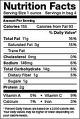
Focusing on our health and being accountable for what we put into our bodies can be powerful. Food labels can often be a little confusing though, but looking at them before making buying decisions is a healthy habit to get into, and so if you’re trying to cut down on sugar, salt or saturated fat for instance, think of it as being your very own food detective.
Food labeling is pretty much in two parts …firstly the ingredients listing which gives a good overall understanding of what’s actually in the product. They’re usually listed in order of dominance, so biggest ingredient is listed first etc…
…and then also there’s a nutritional breakdown of the product where each of the following has to be provided for 100g or 100ml of the food:
Energy Is measured in calories (kcal) or joules (KJ) and highlights the amount of energy that the food will provide.
Protein Measured in grams, this is the total amount of protein that the food contains. There are 4 calories in each gram of protein.
Carbohydrates Again, measured in grams. There are also 4 calories in each gram of carbohydrate. Note though that there is a big difference between refined and complex carbohydrates and the label will highlight how much carbohydrate is in the product, and how much of that carbohydrate is from sugars (including both naturally occurring sugars, eg those in fruit or milk, along with those added in the manufacturing process).
Fat Measured in grams, there are 9 calories in each gram of fat and the Department of Health recommends that 10% of daily calories should come from fat. Our bodies need fat to operate, but do limit saturated or trans fats in your diet and go for the essential fatty acids, known as omega oils 3, 6 and 9 along with monounsaturated and polyunsaturated fats.
Labels don’t always list these but to calculate the polyunsaturated and/or monounsaturated fats in the product just look at the total for trans and saturated fat from the total fat value and you’re left with the poly’s and the mono’s.
Fibre The Food Standards Agency suggest an intake of between 18-24g of fibre per day. Average consumption is c12g.
Sodium Salt is also known as sodium chloride and it’s the sodium in salt that can have a detrimental affect on our health. To calculate how much salt is contained in the product, multiply the sodium figure by 2.5.
Additional listings These include any additional nutrients for which claims have been made, eg vitamin and mineral content although this information isn’t required by law unless there’s a specific claim such as ‘rich in antioxidants’ in which case you’d see a breakdown of vitamins A, C and E listed.
Often there’s a breakdown by serving size (usually 30g) too.
…And so here are three tips to help make decisions:
:: Ignore nutrition claims such as ‘low fat’ or ‘low sugar’. In a nutshell this means processed and it’s a good rule of thumb to go with foods as close to the way Mother Nature provides them. Broccoli doesn’t need any nutrition claims or a market budget for instance …where as Coco Pops do! Mmmm I wonder why that is?
:: Reviewing the list of ingredients… ideally there should be around five. If the list is really long and there are words that you don’t understand or that sound like chemicals rather than actual food, then it’s best left on the shelf. Ideally sugar shouldn’t be in the first three ingredients listed, but you’ll be surprised how often it is!
:: Use the nutrition label to make decisions about what you’re eating. Manufacturers add sugar to so many products now, even savoury dishes, so take charge of what you’re putting in your body. Salt is another culprit so avoid options with salt added for you and have some good quality sea salt to hand if you think your food needs it.
Don't stress about your diet, just get a new www.attitudetofood.com