The streets of London may not immediately evoke the romantic aura of Paris, or the seductive magnificence of Rome; in fact, does London have the slightest iota of romance, or is it more a city for the cynics among us? Passionate stories to rival that of Anthony and Cleopatra may have been few and far between, but the capital has had its fair share of love, lust and adultery.
Edward and Wallis
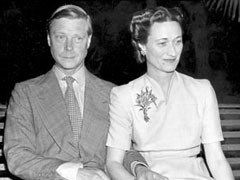
Such was the love of King Edward VIII for American divorcee Wallis Simpson that he gave up the throne to be able to marry her. His proposed marriage threatened to cause a constitutional crisis; not only would the marriage go against the Church but if he were to marry ignoring the Prime Minister’s advice the government would have to resign. But he had fallen hook, line and sinker for Wallis, whose bullish attitude towards him and his royal position only enticed him further. They first met at a party in London, when Wallis was still married to Ernest Simpson, and belonging to the same social circle meant the two would frequently meet. They soon became lovers; Wallis divorced her husband and the two married in 1937, despite Wallis confiding in family and friends that she found the relationship claustrophobic due to Edward’s dependence on her. Edward was stripped from the title of King, and instead they became the Duke and Duchess of Windsor. There were numerous reports of extramarital flings on both sides, including Wallis’ relationship with the playboy Jimmy Donahue, however Edward, still besotted, followed them around for the four-year duration of their affair. The couple made their relationship work amidst all the turmoil, for they retired to the outskirts of Paris where they lived together till Edward’s death from cancer in 1972. Wallis died at home in 1986, after suffering from senile dementia for a number of years.
\n\nEmma and Horatio
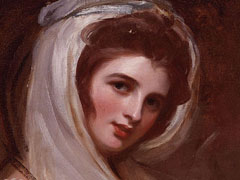
Bizarrely enough, at a time when it was normal for men to flaunt their affairs with courtesans in public, humiliating their wives, an affair between two married people would be the subject of the greatest vilification. Horatio Nelson, captain and hero, became infatuated with Lady Emma Hamilton soon after meeting her, even prompting him to sing her praises in a letter to his wife. When Naples was invaded by France in 1798, Emma, her husband William Hamilton and Nelson fled to Sicily, where the three lived in the same house. Somehow amidst this cosy arrangement their passionate affair began, and Emma soon fell pregnant with Nelson’s child. The trio returned to London and became the subject of much gossip despite Emma and her husband still living together - their lives were played out for all to read in the newspapers, making this the biggest scandal of the 18th century. When Emma gave birth she pluckily named her daughter Horatia, and her and Nelson eventually set up home together in Merton, near Wimbledon, however he was never home for too long before having to embark on another voyage. During one of his travels he altered his will in favour of Emma and Horatia, and asked for the government to take care of his mistress and daughter after his death. This wasn’t to be however, as once he passed away they refused to offer their help, and with no one to turn to she ended up in thousands of pounds of debt and eventually imprisoned for money she owed. After her release she left London for Calais, but her spirit was broken, and she died just before her 50th birthday in 1815. The Wimbledon house so beloved of Emma was torn down and replaced, but she does have a rose named after her, characterised by its strong, appealing fragrance.
\n\nOscar and Alfred
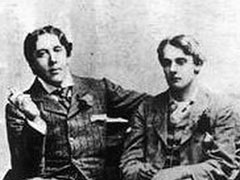
One of London’s most tumultuous love affairs is that of Oscar Wilde and Lord Alfred Douglas, the relationship which would cause Oscar to be taken to trial and eventually imprisoned. Oscar was married with two sons when the two men initially met, but despite this they embarked on a turbulent liaison with many break-ups and reconciliations. Alfred was sixteen years his junior, with a flamboyant character – he thought nothing of spending large amounts of money on gambling and rent boys, then demanding that his lover would fund his excesses. Alfred and his father, the Marquess of Queensberry, loathed each other, and it was he who began the chain of events that would result in Oscar’s downfall. One evening he left a postcard at the Albemarle Club, the West End member's club Oscar frequented, bearing the words “For Oscar Wilde posing as a sodomite”. Oscar, perhaps somewhat hastily, sued him for libel, (sodomy was a great crime in 19th century Britain) but the case was dropped and Oscar was sent to trial for gross indecency. He was convicted and sentenced to two years of hard labour. He reunited with Alfred after his release, although they couldn’t fully reconcile. Like in the very best love affairs, Alfred turned against his former lover, going as far as condemning his homosexuality after his death, in a bid to alter the public’s perception of him (he had also married and fathered two children). In time he softened, and would go on to write the biography ‘Oscar Wilde: Summing Up’, where he admitted Oscar had “an unconquerable gaiety of soul which ever sustained him”. Despite the bumpy nature of their history the intensity of their feelings is evident in their correspondence. In 1897, Oscar wrote: “I wish that when we met at Rouen we had not parted at all. There are such wide abysses now of space and land between us. But we love each other.”