
Forty Elephants
This gang of shoplifters was initially based around the Elephant and Castle area, but they became so successful their activities expanded to the seaside and the home counties. They operated roughly from the late 1700s to the 1950s.
Where their male counterparts, the Elephant and Castle gang, were brutish and opportunistic, the women were calculating and methodical. Their main crime was stealing; the gang would splinter into factions to target a single shop. And these weren’t small fry either: Selfridges and Whiteleys were among their targets, something which would be impossible to pull off today. Their other crimes included using false names to get work as housemaids before making off with their employers’ belongings.
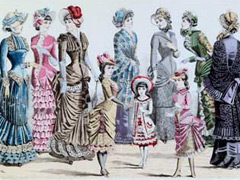
Although they targeted upmarket clothing stores and jewellers, they never wore any of the items they stole, preferring to sell them on to market traders. Instead they sported cummerbunds, large hats, muffs and voluminous skirts, anything they could sew hidden pockets into to help them stash their loot. The stolen goods would quickly be passed on to fellow gang members or to their male colleagues in the Forty Thieves gang, therefore even once the police caught up with them they would more often than be found empty handed.
In the early 20th century they were presided over by Alice Diamond, also known as Diamond Annie. She wore a diamond ring on each finger, something which inflicted serious pain to anyone who came into contact with her fists.
Little was known about the Forty Elephants until a book by ‘Gangs of London’ was published in 2010. Since then, despite being little more than sophisticated shoplifters, they’ve been hailed as heroines in the media for being a clever, tight-knit organisation run entirely by women. Going by the records we have they’re certainly tamer than the gangs talked about in the papers today, perhaps with the exception of Diamond Annie.
\n\nTeddy Girls
Teddy Girls, also known as ‘Judes’, belonged to the same subculture as Teddy Boys. There were a lot less girls in the movement than boys, partly because their clothing, which was tailoring inspired by Edwardian styles (hence the name ‘Teddy’ short for ‘Edward’), wasn’t cheap in the 1950s, particularly when working class girls had even less disposable income than boys. Teddy Girls may well have been the first all-female subculture in Britain.
From the late 1940s onwards the upper classes started dressing in smart tailored suits that harked back to the turn of the century, in a sort of backlash against post-war austerity. But why couldn’t working class teens dress in the same way? They paired the suits, which they purchased from second hand stalls, with rock ‘n’ roll-era clothes, so the girls wore rolled up denim, fitted jackets with velvet collars, cameo brooches, flat brogues and straw boater hats. There were slight differences in style depending on the neighbourhood; the majority of Teddy Girls were from East London, North Kensington and Notting Hill.
They were eyed with suspicion by the wealthy, who felt threatened by a poorer social group stealing their dress sense. Teddy Boys and Girls were rebelling against austerity, their parents and conformity, and so the press wasted no time in labelling them hooligans. However there were many who did have a hand in murky activities like bootlegging and thieving; some were infamously involved in the Notting Hill race riots of 1958. But overall, for Teddy Girls joining this gang was about freedom and independence, but via fashion and identity rather than criminal activity.
\n\nBovver Birds
Bovver boots are the heavy, steel-toed boots popularised by skinheads and punks in the 70s. The name ‘bovver’ comes from the Cockney pronunciation of ‘bother’, and perfectly describes the nature of the Bovver Birds, the female companions to the Bovver Boys.
The Bovver Birds stemmed from the skinheads, an often misunderstood subculture. The general view of a skinhead today is someone with far right affiliations, usually with racist views, however the original skinheads were greatly influenced by Jamaican music and culture; in fact in the 1960s many skinheads were black. Skinheads were so-called because of their penchant for having closely shaved hair, in retribution for hippies’ longer hairstyles. Hippies were generally speaking from middle class backgrounds, whereas skinheads were working class.
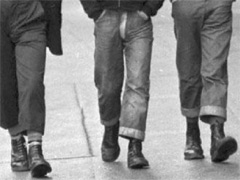
Bovver Birds wore similar clothing, i.e. shirts and tight fitting rolled up jeans, much like their male cohorts. They didn’t shave their heads, rather they had feather cut hair styles (short on top, with a fringe and long sections at the sides and back). They formed gangs with the intention of causing trouble, large groups of girls were known to assault and mug people in the street.
Their habit for mindless violence has made Bovver Boys and Birds the subject of many parodies in popular culture, plus in 2013 a computer game called ‘Bovver Boys of the Dead’ was released, where Bovver Boys kill zombies to a punk soundtrack.