
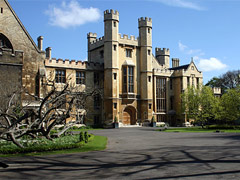
Lambeth Palace on of the most recognisable sights on the bank of the River Thames, the Palace has been the home of the Archbishop of Canterbury since 1200AD. The Palace was originally closer to the waterfront and the Archbishops came and went using the archiepiscopal barge. Many believe that the word Lambeth originates from the word loamhithe meaning ‘muddy bank’.
Access to the palace is gained through the Tudor brick gatehouse built by Cardinal Morton in 1495. The Fig trees in the garden are thought to have descended from those planted by Cardinal Pole, the last of the Catholic Archbishops, in the sixteenth century. Past the Fig Trees lies the Great Hall which fell into disrepair under Oliver Cromwell and was rebuilt by Archbishop Juxon. The Chapel and Crypt were built in the thirteenth century; the chapel was damaged during the war, but has now been fully restored. Lollards Tower was originally a water-tower but is best known as the prison of Wycliffe’s supporters. Wycliffe stood trial for heresy in the Chapel in 1378.
Architect Edward Bore replaced the two East wings of the Palace with a single block built from Bath stone during the nineteenth century. The Palace Gardens contain a herb garden and rose terrace. They are among the oldest and largest Gardens in London and are open all year round.
Lambeth Palace is not open to the general public though tours can be arranged by writing to the bookings department.